
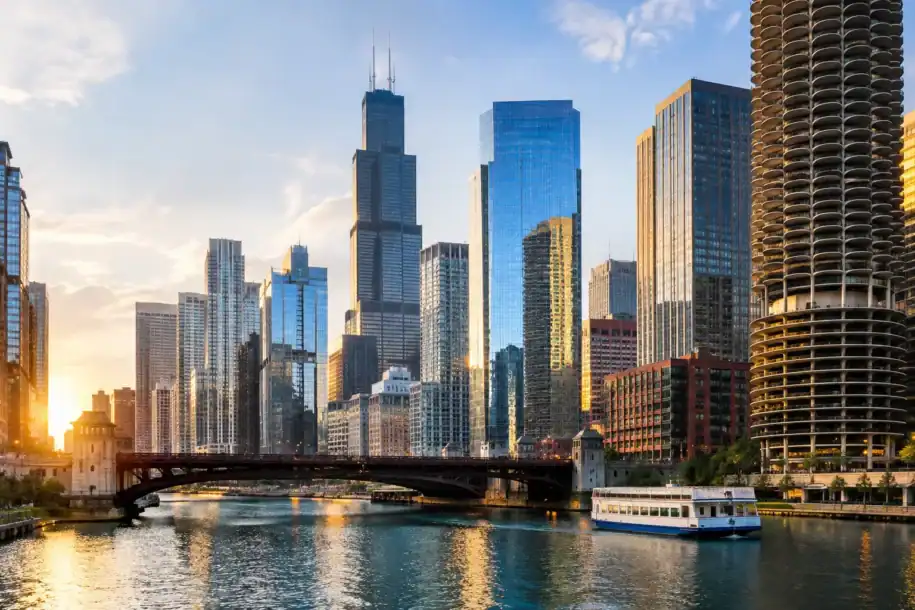
Chicago does not hide its architecture behind museum ropes. It rises above the river, frames busy sidewalks, and turns a simple walk to dinner into a close look at design history. The best Chicago architecture experiences make that scale feel personal, whether you have two hours between plans or a full weekend to explore.
This is a city of landmark skyscrapers, daring modernism, grand old theaters, and neighborhoods where brick greystones tell a quieter story. Choose the experience that matches your time, energy, and travel style, then reserve ahead when a popular tour has limited space.
1. Take a Chicago River architecture cruise
For many first-time visitors, this is the one experience to put at the top of the list. A guided river cruise gives you a clear view of Chicago’s skyline while an expert explains how the city rebuilt after the Great Fire and became a laboratory for tall-building design.
You will see major names and styles in one sitting, from historic towers to sleek contemporary buildings. The real advantage is perspective: on the river, the city’s density makes sense in a way it cannot from street level. Cruises are especially useful for families, groups, and travelers with limited time because there is little walking and plenty to see.
Daytime tours are best for crisp building details and photographs. Choose an evening departure if you want the skyline lit up and a more relaxed, date-night feel. Wind can make the water noticeably cooler than the streets, even in summer, so bring a layer.
2. See Chicago from the Skydeck at Willis Tower
The Skydeck offers a different lesson in Chicago architecture: height changes everything. From high above the Loop, you can trace the city grid, spot the river’s bends, and see how Lake Michigan shapes the skyline.
The glass ledges are the headline attraction, but give yourself time for the wider views. This is an easy add-on to a Loop itinerary, particularly if you are already visiting nearby museums, restaurants, or theaters. Sunset slots can be memorable, though they are often the busiest and may require more patience.
If heights are not your thing, the view is still worthwhile from inside. If you want a less crowded experience, book an earlier time on a weekday.
3. Walk the Loop with an architecture guide
A walking tour of the Loop slows the city down. Instead of identifying towers from a boat, you can study the ornament on a facade, step into a historic lobby, and hear why certain buildings changed the future of American cities.
Look for tours that cover the Chicago School, Art Deco landmarks, and major works by architects such as Daniel Burnham, Louis Sullivan, and Mies van der Rohe. The best guides connect these names to real details in front of you, not just a stream of dates.
This option suits travelers who like context and do not mind being on their feet. It is also a strong choice in spring and fall, when downtown walking is comfortable. In winter or during a hot summer afternoon, a river cruise or indoor-focused tour may be the better call.
4. Tour the interiors at the Chicago Architecture Center
The Chicago Architecture Center is a smart first stop if you want to understand what you are looking at before heading out. Its detailed city model gives a fast, visual introduction to Chicago’s neighborhoods, skyscrapers, transit routes, and lakefront.
The center also serves as a departure point for a range of guided tours. That makes it a practical choice for visitors who want options in one area rather than a scattered day of research. Spend time with the exhibits, then choose a walking or river experience that fits your schedule.
For architecture fans, this stop adds depth. For casual visitors, it helps turn a skyline photo into a story you can actually follow.
5. Visit Frank Lloyd Wright’s Home and Studio in Oak Park
Chicago’s architectural story extends beyond downtown. In nearby Oak Park, Frank Lloyd Wright’s Home and Studio offers a close look at the architect’s early ideas and the Prairie School style that grew around them.
The appeal here is intimacy. You are not looking up at a building from across a street. You are moving through rooms, seeing how light enters the space, and noticing how Wright blurred the boundaries between architecture, furnishings, and daily life.
Oak Park takes more time to reach than the Loop, so it works best as a half-day plan rather than a quick stop. Combine it with a neighborhood walking tour if you want to see more Prairie-style homes nearby. Travelers who prefer skyscrapers may want to prioritize the river first, but design lovers should not skip this detour.
6. Step inside the Rookery Building
The Rookery Building is proof that some of Chicago’s most rewarding architecture is found indoors. Its historic light court, reworked by Frank Lloyd Wright, is one of the city’s standout spaces and a powerful contrast to the steel-and-glass towers around it.
Interior tours can be limited, so this is a place to plan ahead rather than assume you can walk in. The building is also easy to pair with a Loop architecture walk. Even if you only have time to admire it from the street, pause long enough to notice the building’s distinctive facade and entrance.
7. Explore Millennium Park and nearby modern landmarks
Millennium Park is more than a quick photo stop at Cloud Gate. It is an approachable introduction to contemporary Chicago design, with Frank Gehry’s Pritzker Pavilion and the dramatic BP Pedestrian Bridge creating a playful contrast to the historic buildings nearby.
This is one of the most flexible architecture experiences for families and first-time visitors. There is no need to build your whole day around it, and the park fits easily between the Art Institute, the lakefront, and Michigan Avenue. Visit early for more room to take photos, or return at night when the surrounding skyline glows.
8. Look up along Michigan Avenue and the Magnificent Mile
The Magnificent Mile is known for shopping, but it is also a convenient self-guided architecture route. Start around the Chicago Water Tower, one of the few structures to survive the 1871 fire, then look north and south for a fast-changing mix of Gothic, Art Deco, postwar, and contemporary styles.
This is a good choice for travelers who want architecture woven into a day of dining, shopping, or sightseeing. It lacks the deep interpretation of a guided tour, but it gives you freedom to stop whenever a building, storefront, or rooftop catches your attention.
Bring comfortable shoes and look up often. In a busy corridor, it is easy to focus only on the street-level crowds.
9. Take a lakefront skyline cruise
A lake cruise gives Chicago a grand, cinematic profile. From the water, the skyline stretches across the shore with fewer visual interruptions than you get from the river. It is particularly appealing for travelers who have already done a river cruise or who want architecture paired with open-lake views.
The trade-off is detail. River tours usually provide closer views of individual buildings and more concentrated architectural storytelling. Lake cruises deliver the big picture, plus fresh air and dramatic photos. Choose based on whether you want expert building-by-building context or a broader skyline experience.
10. Make time for a neighborhood architecture walk
Chicago is not only its downtown towers. Neighborhoods such as Hyde Park, Lincoln Park, Bronzeville, and Wicker Park reveal how the city lives at street level through historic homes, churches, cultural institutions, and commercial corridors.
A neighborhood tour can be especially rewarding for repeat visitors who have already seen the headline sights. Hyde Park offers major cultural landmarks and university architecture, while Bronzeville opens a window into Black Chicago history and its built environment. The right choice depends on what you want architecture to explain: design, community history, or both.
How to choose the right Chicago architecture experience
Start with your available time. A river cruise is the fastest high-impact introduction, while Oak Park and neighborhood walks deserve more room in the itinerary. If your group includes kids, older relatives, or anyone who wants less walking, cruises and observation decks are usually easier choices.
Then think about what you want to remember. Choose an interior tour for craftsmanship and close-up details. Choose the Skydeck or a lake cruise for dramatic views. Choose a guided walk if you want stories that turn buildings into a richer picture of Chicago.
For a simple plan, book one guided experience and leave space for an unplanned walk. Hop On City Tours makes it easier to compare Chicago activities by the kind of day you want, so you can spend less time sorting options and more time looking up.
Chicago rewards curiosity. Keep your camera ready, but do not spend the whole day behind it. Pause beneath a lobby ceiling, follow the river for another block, and let the city surprise you with what appears above the next corner.