
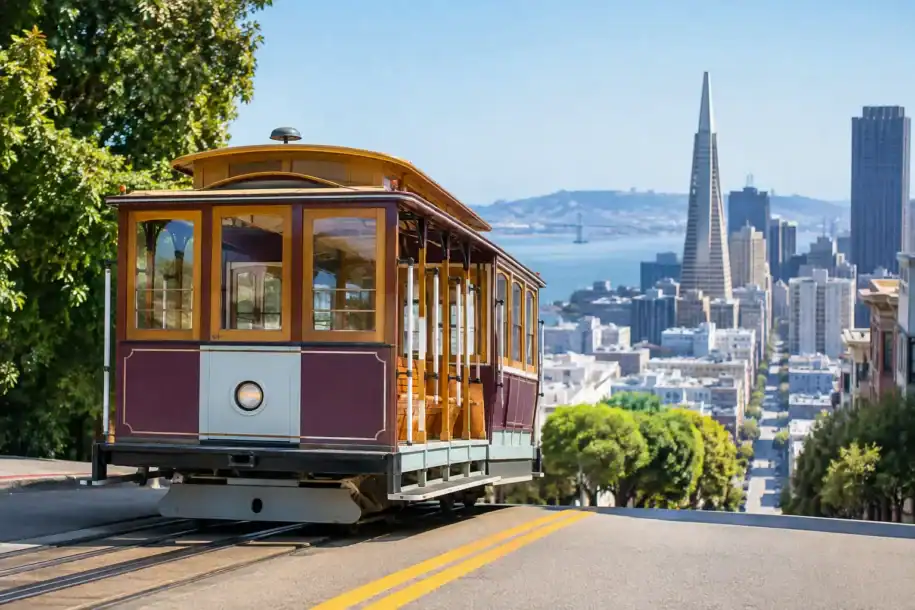
The bell rings, the gripman leans into the turn, and suddenly you are climbing a San Francisco hill with bay views ahead. San Francisco cable car tickets are your entry to one of the city’s most memorable rides, but choosing the right ticket matters when you are balancing a packed sightseeing day, family schedules, and those famously long boarding lines.
A cable car is more than transportation. It is a working historic landmark and a great way to connect major visitor areas such as Union Square, Nob Hill, Fisherman’s Wharf, and Ghirardelli Square. Choose your route and fare before you arrive, then spend less time sorting out transit and more time exploring.
San Francisco Cable Car Tickets: Your Main Options
Most visitors will choose between a single cable car ride and a visitor-focused transit pass. The better value depends on how often you expect to ride and whether you will use Muni buses and streetcars elsewhere in the city.
A single-ride ticket is the straightforward option if a cable car ride is a must-do experience rather than your primary way of getting around. You can generally buy it from the conductor when boarding. It is ideal for travelers planning one scenic ride, perhaps from Powell Street toward Fisherman’s Wharf, then walking or taking a different form of transit for the rest of the day.
For more flexibility, look at Muni visitor passes, often called passports, that include cable car rides as well as Muni buses, historic streetcars, and light rail. These can make sense for a long sightseeing day or a multi-day stay, especially if your itinerary includes neighborhoods beyond the waterfront. Exact fare prices, pass durations, and purchase options can change, so confirm the current details before your trip.
Mobile tickets are particularly convenient for many travelers. Purchase and activate the appropriate fare through the official Muni mobile ticketing option before boarding, and keep your phone charged. A physical Clipper card can also be useful for broader Bay Area transportation, though not every fare product works the same way. Check that the product you choose specifically covers cable car travel rather than assuming a standard local transit fare will do it.
The key distinction: cable cars are not regular Muni rides
This is the detail that catches many first-time visitors. A regular Muni bus or streetcar fare does not automatically include a cable car ride. Cable cars have their own single-ride fare, while qualifying visitor passes cover both cable cars and other Muni services.
If your plans only include one cable car ride, buying a single ticket is usually simpler. If you expect to use cable cars twice and take several buses or streetcars, price the visitor pass against individual fares. The pass is about convenience as much as savings: it gives you freedom to change plans when a hill feels steeper than expected or a neighborhood catches your attention.
Choose the Cable Car Route That Fits Your Day
San Francisco has three operating cable car lines. They share the same classic experience, but the scenery, boarding pressure, and nearby attractions differ.
Powell-Hyde: best for big views
The Powell-Hyde line runs between the Powell Street turnaround near Union Square and the Hyde Street turnaround near Ghirardelli Square. It is the route many visitors picture, thanks to dramatic downhill views toward Alcatraz, the bay, and Lombard Street.
Take it from Powell Street if you want the full uphill-to-downhill experience. Ride from Hyde Street if you are starting near Fisherman’s Wharf or Ghirardelli Square and want to head toward Union Square. This line is exceptionally popular, so it also tends to have the longest waits at its terminal stops.
Powell-Mason: a smart waterfront alternative
The Powell-Mason line also begins at Powell Street but ends near Taylor and Bay streets, close to Fisherman’s Wharf. It does not deliver the same famous Hyde Street descent, but it is still a classic cable car ride and can be a practical alternative when Powell-Hyde lines are substantial.
For families with timed reservations at the waterfront, this route can be the better choice. You get the cable car experience without building your entire morning around one queue.
California Street: best for Nob Hill and downtown
The California Street line runs east-west between the Financial District and Van Ness Avenue. It is less focused on waterfront sightseeing and often feels more like a useful neighborhood ride. Choose it for a beautiful climb through Nob Hill, access to hotels in the area, or a break between downtown stops.
There is no turnaround spectacle here like the one at Powell and Market, but that can be a benefit. It is often the most practical line when you want to ride rather than wait.
When to Buy and Where to Board
Buying ahead is helpful, but it does not give you a reserved seat or let you skip the boarding line. Cable cars operate as public transit, not timed-entry attractions. Your ticket covers your fare; your place in line is still your place in line.
At the Powell Street turnaround near Market Street, visitors can watch staff manually turn the cable car on its rotating platform. It is fun to see, but it is also the city’s most obvious cable car boarding point. Arrive early in the morning for a better chance at a shorter line, especially on weekends, holidays, and summer travel dates.
Boarding at an intermediate stop can be faster, although the car may already be full. If you have a group, young children, or anyone who needs a seat, starting at a terminal is generally the less stressful plan. Be ready to take the next car if the first one fills up.
A few practical rules make the ride easier:
- Have your ticket, pass, or activated mobile fare ready before the car arrives.
- Keep bags compact and secure, particularly if you are standing on an outside platform.
- Let passengers exit before trying to board.
- Hold on with both hands if you stand, and keep children close.
Standing on the outside running boards is part of the appeal for some riders, but it is not the best choice for everyone. The ride can be bumpy, the car can be crowded, and the driver may close off areas for safety or capacity. Families, travelers with mobility considerations, and anyone who wants to take photos without juggling a handhold may prefer an inside seat.
Build a Cable Car Ride Into a Better San Francisco Day
The smartest cable car plan is usually not a round trip. Use the ride to move between places you already want to see.
A popular route is to begin around Union Square, board the Powell-Hyde line, and exit near Lombard Street. From there, walk down toward Ghirardelli Square and Fisherman’s Wharf. The walk is downhill in places, but San Francisco sidewalks and grades can still be demanding. Wear comfortable shoes and leave time for photo stops.
Another easy pairing is the California Street line and Nob Hill. Visit Grace Cathedral, take in the architecture and city views, then continue toward Chinatown or downtown on foot. This approach works well for couples and repeat visitors who want a cable car moment without spending the whole day in the busiest tourist corridor.
If you are planning several paid attractions, tours, or a harbor experience, map the cable car around fixed reservation times. A long queue can turn a relaxed schedule into a rushed afternoon. Hop On City Tours can help travelers compare other San Francisco experiences in one place, but leave a buffer around the cable car portion of your day.
Is a Day Pass Worth It?
A day pass is worth considering when the cable car is one piece of a transit-heavy itinerary. Think of a day that starts at Union Square, continues to Fisherman’s Wharf, includes the Embarcadero or Mission District, and ends with dinner in North Beach. If you will be hopping between neighborhoods, a pass reduces the friction of calculating fares throughout the day.
It may not be worth it if you are staying near the waterfront, have only one cable car ride planned, and prefer to walk between nearby attractions. San Francisco is compact in sections, and some of the best discoveries happen on foot. The trade-off is the hills, which can make walking far more time-consuming than a map suggests.
For a two- or three-day visit, compare a multi-day pass with your full plan rather than buying automatically. A pass is valuable only if you will use it. Travelers spending most of their time on guided tours, ride-shares, or in one neighborhood may be better off with individual fares.
A Few Mistakes to Avoid
Do not confuse a cable car with the historic F-line streetcar. The F-line runs along Market Street and the Embarcadero using vintage streetcars, while cable cars are the open-sided vehicles pulled by an underground cable. Both are fun, but they use different routes and can have different fare rules.
Do not count on a cable car as a fast cross-city commute. These cars are historic, capacity is limited, and lines can form quickly. Treat the ride as an experience with a transportation benefit, not the quickest way to every attraction.
Finally, do not save the cable car for the final hour before a dinner reservation, show, or flight connection. Give yourself room for a wait, a weather shift, or the simple temptation to linger when the bay appears at the bottom of the hill.
Pick the route that fits your plans, choose the fare that matches your transit needs, and board with time to enjoy the ride. The best cable car moment is not the one you rush through – it is the one that becomes part of your San Francisco day.